
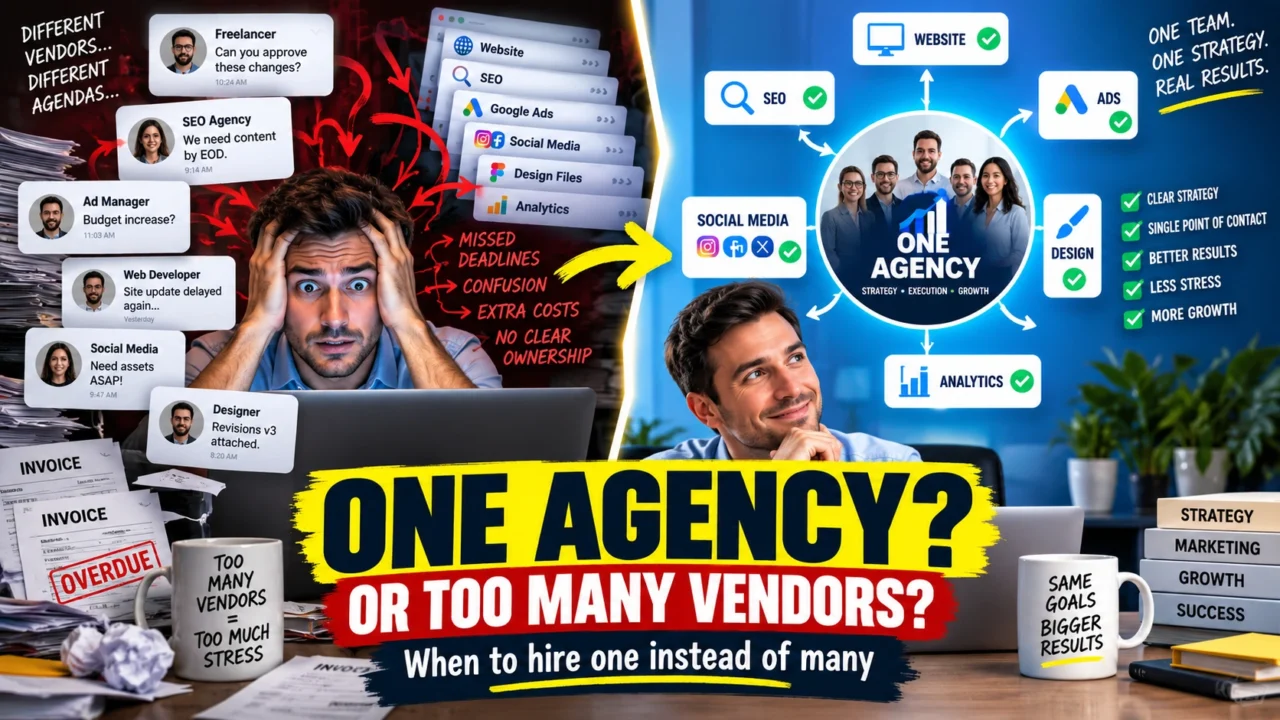
Hiring one agency is not automatically better than using several specialists. The right choice depends on the size of the project, the skills required, the need for coordination and how much internal management the business can handle. When website, SEO, design, content and social media are
Table of ContentsOpen
Hiring one agency is not automatically better than using several specialists. The right choice depends on the size of the project, the skills required, the need for coordination and how much internal management the business can handle.
One agency can reduce coordination work
When website, SEO, design, content and social media are connected, one team can reduce repeated briefing and conflicting decisions. This is useful for smaller businesses that do not have an internal marketing manager coordinating several vendors.
Specialists can be better for deep narrow requirements
A complex app, a large paid-media account or a highly technical SEO problem may justify a dedicated specialist. A good agency should be clear about what it handles directly and where another expert is the better fit.
Look at the handoff points
Many problems happen between vendors: design is created without SEO requirements, content arrives after development, ads send traffic to weak landing pages, or social campaigns use branding that does not match the website. Fewer handoff points can make execution smoother.
Ask who owns the final outcome
Whether you hire one agency or several providers, responsibilities should be clear. Define who controls hosting, analytics, website access, content approvals, campaign budgets, reporting and final files.
Compare process, not only price
The cheapest combination can become expensive if the business spends hours coordinating people or correcting inconsistent work. Ask how requirements are documented, how reviews happen, what is included, and how changes are handled.
When one agency usually makes sense
- The website, SEO and creative work need to launch together
- The business wants one point of communication
- Brand consistency is important across channels
- There is no internal person managing multiple vendors
- The work needs ongoing updates after launch
When multiple specialists may make sense
- The project requires deep specialist expertise
- An internal team can manage coordination
- Different vendors already have proven responsibility for separate systems
- The business needs independent review or risk separation
Conclusion
Choose the structure that makes responsibilities, communication and quality easiest to manage. The best setup is the one that keeps the business goal clear while giving each part of the work the right level of expertise.



No comments yet